Chinese

NEWS
The Breakthrough Development of Digital Night Vision Technology: Core Advantages Compared with Traditional Analog Night Vision
Time: 2026-02-10
Read: 799
The Breakthrough Development of Digital Night Vision Technology: Core Advantages Compared with Traditional Analog Night Vision
The quality of traditional analog night vision devices is highly dependent on the quality of Image Intensifier Tubes (IIT), and due to the limitations of batch-based IIT testing, it is impossible to maintain stable imaging consistency. This pain point has long restricted the development of the night vision industry. The breakthrough emergence of digital night vision technology has completely broken this bottleneck. Compared with traditional analog night vision, its advantages are reflected in multiple core dimensions such as imaging stability, functional expandability, and practicality. It not only solves the long-standing pain points in the industry but also promotes the upgrading of night vision devices towards intelligence and diversification. The specific advantages are as follows:
1. Free from IIT Dependence, Significantly Improved Imaging Consistency
This is the core breakthrough of digital night vision technology, directly addressing the fatal shortcoming of traditional analog night vision devices. The imaging quality of traditional analog night vision devices is completely dependent on the quality of IIT. As a core precision component, even IITs produced in the same batch can hardly guarantee consistent performance. In addition, their test reports only apply to each batch and cannot cover individual products, resulting in obvious differences in imaging effect, sensitivity, and resolution among the same model of analog night vision devices, bringing great inconvenience to user use and bulk purchasing.
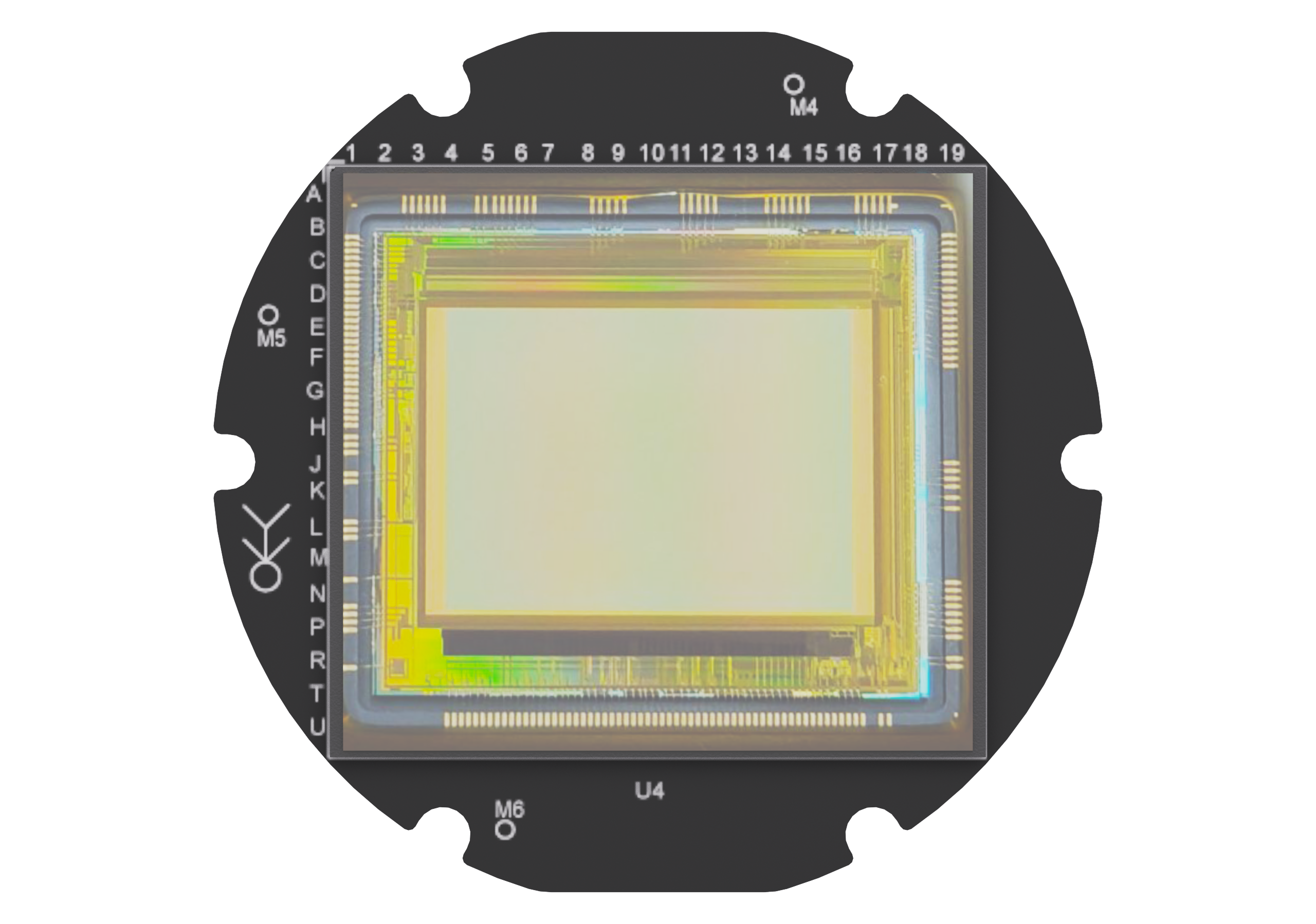
Digital night vision technology, on the other hand, is completely free from dependence on IIT. Its core imaging relies on CMOS/CCD image sensors combined with digital signal processing chips. Such sensors have mature production processes and high standardization, which can strictly control the performance parameters of individual products during mass production, without relying on precision but inconsistent IIT components. At the same time, digital signals can be uniformly calibrated and optimized through software algorithms, ensuring stable imaging effects for both individual and bulk products. The consistency of key parameters such as resolution, sensitivity, and contrast can reach more than 95%, completely solving the industry pain point of "different quality for the same model" in traditional analog night vision devices.
2. Supported by Digital Image Processing, Clearer and More Controllable Imaging Effect
The imaging process of traditional analog night vision devices is pure optical-electronic conversion without digital processing. The imaging effect is completely determined by hardware performance. Once the hardware is fixed, the imaging quality cannot be adjusted, and problems such as noise, halos, and image distortion are likely to occur, greatly reducing the observation effect in low-light and complex environments.
Digital night vision technology is equipped with a professional Digital Signal Processing (DSP) chip, which can perform real-time optimization processing on the original images captured by the sensor—suppressing environmental noise through noise reduction algorithms to make imaging in dark environments cleaner; highlighting target details through contrast enhancement algorithms, enabling clear distinction between targets and backgrounds even in low-light and complex light environments; at the same time, brightness, contrast, sharpness and other parameters can be manually adjusted according to user needs to adapt to different usage scenarios (such as mountain forest observation, outdoor patrol, night operations, etc.). In addition, digital imaging can effectively avoid common halo and distortion problems of analog night vision devices, with clearer imaging edges and softer images, greatly improving observation comfort and accuracy.
3. Extremely Strong Functional Expandability, Adapting to Multi-Scenario and Intelligent Needs
Traditional analog night vision devices have extremely single functions, with the core only realizing the basic need of "seeing objects in the dark". They cannot perform additional operations such as image storage, transmission, and zooming, with limited applicable scenarios, making it difficult to meet the diversified and intelligent needs of modern users.
The digital nature of digital night vision technology endows it with extremely strong functional expandability, becoming an important advantage distinguishing it from traditional analog night vision devices. On the one hand, digital night vision devices can easily integrate image storage and video recording functions. Users can directly save the observed images and videos to the device memory or external storage devices for subsequent review and sharing, without the need for additional shooting equipment. On the other hand, it can integrate Picture-in-Picture (PIP) and digital zoom functions, allowing users to view zoomed-in images of local details through a small window while observing the overall scene without affecting the imaging of the main screen. This function is highly practical in scenarios such as outdoor observation and target tracking.
In addition, digital night vision devices can also adapt to intelligent upgrading. They can connect to computers, mobile phones and other devices through interfaces to achieve real-time image transmission and remote control; some high-end products can also integrate thermal imaging fusion functions, combining the advantages of low-light imaging and thermal imaging to achieve stable observation even in extreme environments such as total darkness, heavy fog, and thick smoke, further expanding the application scenarios of night vision devices (such as security monitoring, forest fire prevention, outdoor adventure, military reconnaissance, etc.).
4. Higher Stability, Longer Service Life, and Lower Maintenance Costs
The IIT components of traditional analog night vision devices are precision and fragile, with poor environmental adaptability. They are afraid of strong light, vibration, and moisture. After long-term use, they are prone to aging and attenuation, leading to a decline in imaging quality. Moreover, the maintenance and replacement costs of IIT are extremely high. The replacement cost of some high-end IITs is close to half of the total device price, bringing a large burden of use cost to users.
The CMOS/CCD sensors used in digital night vision devices have stronger environmental adaptability, excellent performance in resisting strong light, vibration, and moisture. Even if used for a long time in complex outdoor environments, they can maintain stable performance and are not prone to aging and attenuation. At the same time, the core components of digital night vision devices have a relatively simple structure, low maintenance difficulty, and no need for frequent replacement of precision components. The maintenance cost is only 1/3 to 1/2 of that of traditional analog night vision devices. In addition, the service life of digital night vision devices can reach more than 10,000 hours, far exceeding that of traditional analog night vision devices (usually 3,000-5,000 hours), further improving the cost performance of the product.
5. Lower Entry Threshold and Stronger Popularization
The core component IIT of traditional analog night vision devices has complex production processes and high R&D costs, leading to generally high prices of analog night vision devices. The price of entry-level products also needs several thousand yuan, and high-end products even exceed 10,000 yuan. The high price threshold limits their popularization and application, and they can only be used in high-end fields such as military and professional security.
The CMOS/CCD sensors and digital processing chips used in digital night vision technology have mature production processes and low mass production costs. Without relying on high-cost IIT components, the production cost of night vision devices can be greatly reduced. At present, the price of entry-level digital night vision devices can be reduced to less than 1,000 yuan, and mid-range products only need several thousand yuan. They can not only meet the needs of professional users but also cover civil scenarios such as ordinary outdoor enthusiasts and home security, greatly improving the popularization of night vision devices and promoting the transformation of the night vision industry from "professional niche" to "civilian public".
In summary, the breakthrough development of digital night vision technology not only solves the core pain points of traditional analog night vision devices, such as IIT dependence, poor consistency, single function, and high cost but also achieves all-round upgrading in imaging quality, functional expansion, practicality, and popularization. It redefines the product form of night vision devices, promotes the entire night vision industry to take a key step towards digitalization, intelligence, and popularization, and provides a more efficient and stable solution for night observation and operations in various fields.